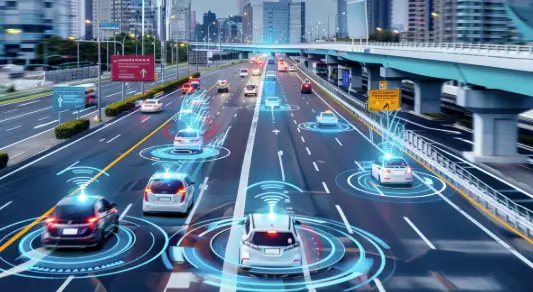
Artificial intelligence is reshaping smart logistics by unifying transportation, warehousing, and last-mile delivery through real-time data and predictive analytics. It enables data-governed, auditable decisions, scenario testing, and proactive exception handling. AI-driven routing, inventory management, and demand forecasting tighten latency, improve ETA accuracy, and balance capacity with demand. The result is end-to-end visibility, efficiency, and scalable performance that prompts organizations to rethink risk, governance, and ROI as logistics complexity grows. The next insight reveals where gains most often emerge.
How AI Enables Smarter Transportation Planning
AI-powered transportation planning leverages real-time data, predictive analytics, and optimization algorithms to balance demand, capacity, and routes across multimodal networks. The approach emphasizes data governance and model interpretability to ensure transparent decisions, auditable outcomes, and compliance. It enables strategic scenario testing, reduces latency in response, and supports freedom-focused operators seeking scalable, resilient mobility solutions without sacrificing accountability or clarity in execution.
How AI Optimizes Warehousing and Inventory
Building on the gains in transportation planning through real-time data, predictive analytics, and optimization, AI in warehousing and inventory applies similar data discipline to storage, picking, and replenishment workflows. Advanced sensing, robotics, and lattice forecasting drive inventory accuracy and streamlined cycles. Demand forecasting informs slotting, reorder points, and capacity planning, enabling resilient, scalable operations while reducing waste, downtime, and manual variance.
How AI Enhances Last-Mile Delivery and Visibility
Last-mile delivery and visibility are increasingly shaped by real-time data, advanced analytics, and autonomous systems that optimize routing, ETA accuracy, and customer communications. AI adoption accelerates pinpointed decisioning, enabling granular ETA adjustments and proactive exception handling.
Real time routing combines live traffic, weather, and carrier signals to reduce delays, elevate transparency, and empower operators with actionable insights for more predictable, fast, and flexible delivery networks.
How AI Drives Resilience, Ethics, and ROI in Smart Logistics
In an era of interconnected networks and heightened stakeholder scrutiny, AI enables smart logistics to balance resilience, ethics, and return on investment with measurable rigor.
The approach emphasizes AI ethics and ROI resilience, aligning risk-aware optimization with transparent governance.
Data-driven frameworks quantify performance, drive strategic investments, and sustain operations while safeguarding stakeholders, efficiency, and value creation across supply networks.
Frequently Asked Questions
How Will AI Adapt to Regulatory Differences Across Regions?
AI will adapt via regulatory flexibility and regional compliance, enabling autonomous routing and compliant forecasting. The system analyzes jurisdictional rules, updates policies in real time, and maintains auditable traces, supporting strategic freedom while meeting diverse regional requirements across logistics networks.
Can AI Reduce Emissions Beyond Cost Savings?
A spark of possibility rises: yes, AI can reduce emissions beyond cost savings by optimizing routes, energy use, and lifecycle planning, with emissions reduction driven through data-driven insights and supplier collaboration that align incentives and transparency.
What Are Data Privacy Implications in Collaboration Networks?
Data privacy concerns arise in collaboration networks, where sensitive data proliferates across partners and platforms. The strategic approach emphasizes governance, access controls, and auditing, enabling freedom to collaborate while minimizing risk through transparency, encryption, and principled data sharing standards.
How Does AI Handle Rare, High-Impact Disruptions?
AI handles rare disruptions by forecasting via ensemble models, deploying adaptive routing, and triggering contingency buffers; it analyzes rare disruptions, high impact events, regional adaptation, and regulatory variation to sustain resilience, efficiency, and freedom in logistics decision-making.
See also: timestribe
What Skills Ensure Successful Ai-Driven Logistics Transformations?
Successful AI-driven logistics transformations rely on skills transfer, change management, data governance, and interoperability, enabling strategic, data-driven decisions; tech-forward leadership supports freedom-oriented teams, aligning governance with agile execution, ensuring scalable adoption and continuous improvement across complex supply chains.
Conclusion
AI is reshaping logistics with data-driven precision, tight coupling of planning and execution, and transparent governance. As networks become more predictive and autonomous, each decision point—routing, warehousing, last-mile—unfolds in near real-time, revealing deeper efficiency gains and risk controls. Yet the true test remains: will the systems anticipate the unseen disruption and adapt without compromise? The balance of speed, ethics, and ROI will determine the next frontier in smart, resilient logistics. The outcome awaits.